
If you’re starting your own online store, looking at the top Shopify stores is a great way to understand what a successful e-commerce business actually looks like. And I’m not just talking about beautiful websites. I’m talking about how these brands attract customers, get people excited about their products, and keep them coming back.
Take Gymshark, which built a community around fitness, or Kylie Cosmetics, which turned product launches into highly anticipated events. Both sell different products, yet each has a distinct strategy worth learning from.
In this guide, I’ll look at 10 of the top Shopify stores across fashion, beauty, footwear, and accessories, breaking down the specific strategies behind their success and what you can borrow for your own business, even on a much smaller budget.
Despite their different industries, these brands have one thing in common: they’ve all built a clear identity around their products, giving customers a reason to choose them over the competition. And that’s perhaps the most valuable lesson for anyone starting out.
How We Picked These Top Shopify Stores
We selected these brands based on three criteria: they run their online stores on Shopify, they’ve built recognizable businesses with a large customer base, and they’re known for a specific strategy worth learning from.
Rather than ranking stores by revenue or traffic, I focused on brands that offer valuable lessons for new online sellers.
While reading the list, you might be surprised that some of these major brands use Shopify. Some, like SKIMS, Fashion Nova, and Bombas, use what’s known as a headless storefront. This means Shopify powers their e-commerce operations behind the scenes, while their customer-facing websites are built separately. Others, like Glossier and Steve Madden, use customized Shopify themes.
The good news? You don’t need a headless setup or a team of developers to build a professional Shopify store. Shopify’s native themes offer plenty of customization options, allowing you to adjust your layout, branding, navigation, and product pages without writing a single line of code.
✍️ Editorial note: This list includes established direct-to-consumer (DTC) brands, not necessarily dropshipping businesses. The goal is to learn from them through practices you can later implement yourself, regardless of your current selling mode. If you’d like to see specific dropshipping examples, check out our roundup of top Shopify dropshipping stores.
From fitness apparel to beauty products and everyday essentials, here’s a quick look at 10 of the top Shopify stores, what makes each brand stand out, and what smaller businesses can learn from them.
| Brand | Category / Niche | What It’s Known For | Lesson for Small Stores |
|---|---|---|---|
| Gymshark | Fitness apparel | Community building and athlete-influencer partnerships | Partner with niche micro-creators. |
| SKIMS | Shapewear and loungewear | Size inclusivity, limited drops, and product waitlists | Make sizing and fit information easy to find. |
| Fashion Nova | Fast fashion | Social-first marketing and frequent product releases | Establish a consistent product release schedule. |
| Alo Yoga | Activewear and wellness | Lifestyle branding and educational content | Create useful content around your products. |
| Kylie Cosmetics | Makeup and skincare | Scarcity-driven launches and founder-led marketing | Build anticipation before product launches. |
| Fenty Beauty | Inclusive cosmetics | Extensive shade ranges and underserved customer segments | Identify and cater to overlooked customers. |
| Glossier | Makeup and skincare | Community-led product development and editorial storytelling | Involve customers in product decisions. |
| Allbirds | Footwear | Material innovation and sustainability-focused storytelling | Explain what your products are made of and why. |
| Steve Madden | Footwear and accessories | Omnichannel retail and large-scale e-commerce | Organize your catalog around customer needs. |
| Bombas | Socks and everyday essentials | One-purchased, one-donated business model | Communicate your mission at the point of purchase. |
Now, let’s take a closer look at each store.
Top Shopify Apparel Stores
Apparel is a particularly interesting niche to study because buying clothes online comes with its own set of challenges. Think about the last time you bought a pair of jeans online without knowing how they’d actually fit.
The following Shopify stores have found different ways to make shoppers feel more confident about their purchases while giving them plenty of reasons to come back.
1. Gymshark: Building a Community Before Selling a Product
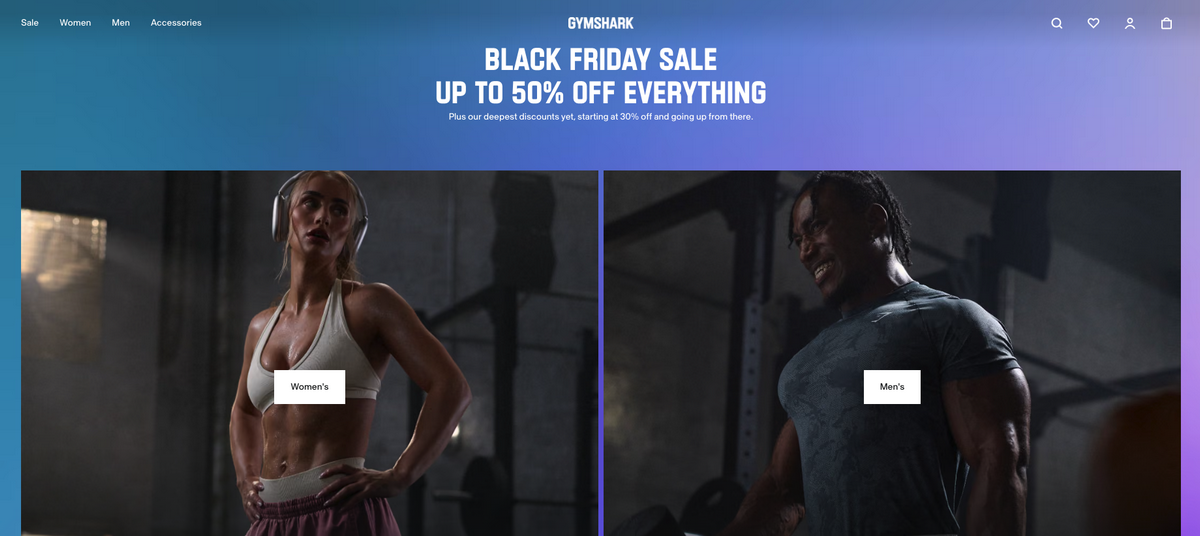
Gymshark is a British fitness apparel brand that sells workout clothes, sports bras, leggings, gym accessories, and activewear for men and women.
🌟 What makes it successful: Back in its early days, Gymshark sent workout clothes to fitness YouTubers who already had the attention and trust of the exact audience the brand wanted to reach. Over time, Gymshark took these relationships beyond social media, organizing fitness events where fans could meet their favorite athletes and train together.
Today, the brand keeps its community engaged through ongoing athlete collaborations, new collection drops, and major sales events, giving customers reasons to stay connected beyond their initial purchase.
💻 What its Shopify store does well: Gymshark organizes its products by both clothing type and activity. Under its shopping navigation, customers can find dedicated collections for weightlifting, running, hybrid training, and Pilates. It makes sense: someone training for a marathon probably isn’t looking for the same clothes as someone preparing for their next leg day.
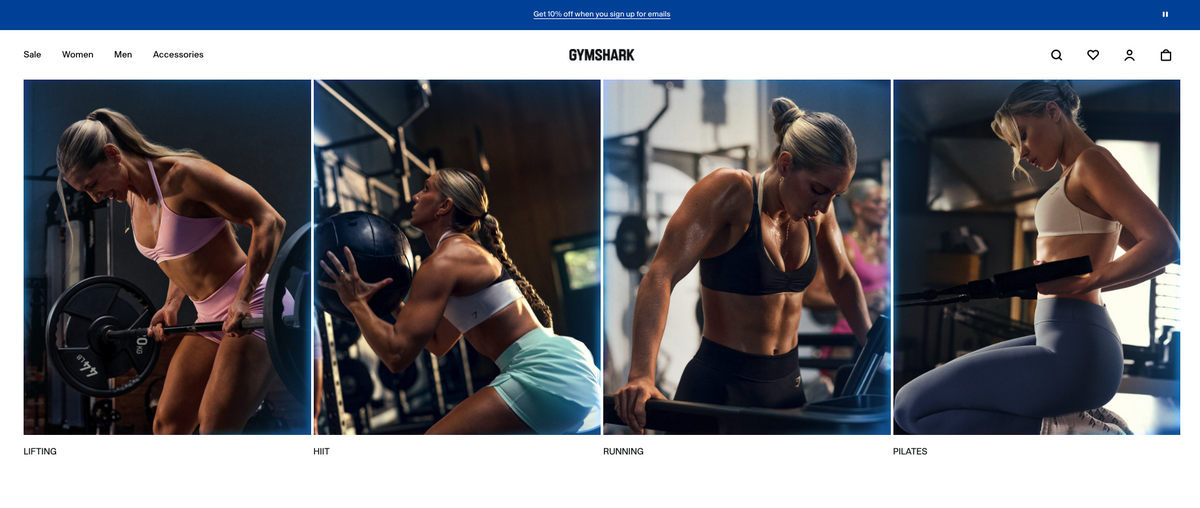
💡 What you can borrow: Instead of spending your entire marketing budget on one big influencer, partner with three or four micro-creators who genuinely understand your niche. Give them products to test, let them create content in their own style, and build ongoing relationships rather than paying for isolated promotional posts.
2. SKIMS: Making Size Inclusivity Part of the Business Model
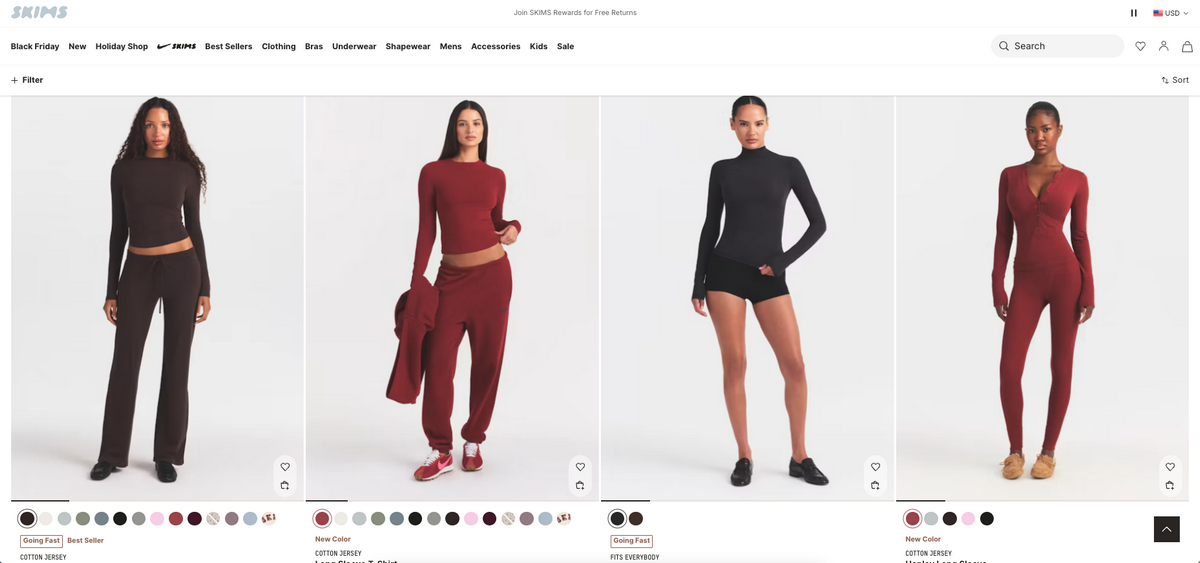
Founded in 2019 by Kim Kardashian, SKIMS sells shapewear, underwear, loungewear, swimwear, and everyday clothing across a wide range of sizes and skin tones.
🌟 What makes it successful: Having one of the world’s most popular celebrities behind your brand certainly helps. But SKIMS also identified a genuine gap in the shapewear market: limited sizing, inadequate skin-tone options, and products that weren’t particularly comfortable.
The brand combined size inclusivity with a drop-based launch strategy, releasing new collections and colors that frequently sold out. In fact, just one month after launching in 2019, SKIMS already had two million people on its product waitlist.
Waitlists are especially interesting because they help the brand retain potential customers even when a product is unavailable, while gathering information about demand before restocking.
💻 What its Shopify store does well: On most items, SKIMS displays sizes from XXS to 4X, alongside the model’s height, measurements, and the size she’s wearing. Customers can also access product-specific fit recommendations and fabric information. If the size is not available, it lets you join a waitlist to get an alert as soon as it’s back in stock.
This keeps customers engaged even when they can’t make an immediate purchase and helps SKIMS turn potential lost sales into future ones.
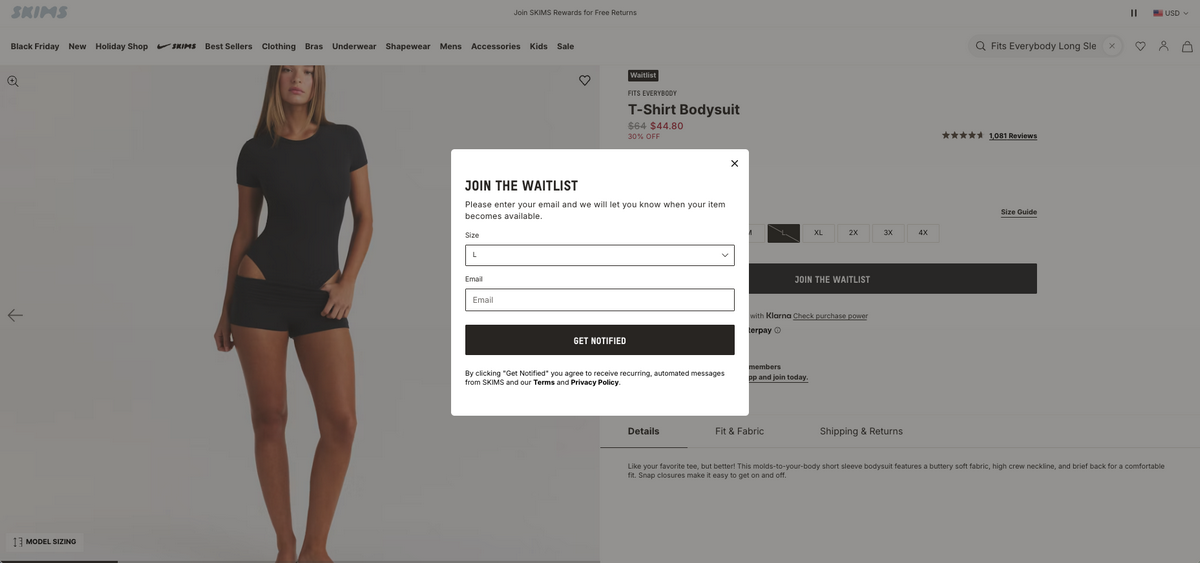
💡 What you can borrow: Make sizing information impossible to miss. Include actual garment measurements, model references, and notes about whether an item runs small, large, or true to size. If you sell clothing online, removing uncertainty about fit is one of the most practical ways to help customers make a purchase. And always give them a way to stay engaged even when their preferred item isn’t available.
3. Fashion Nova: Turning New Arrivals Into a Reason to Return
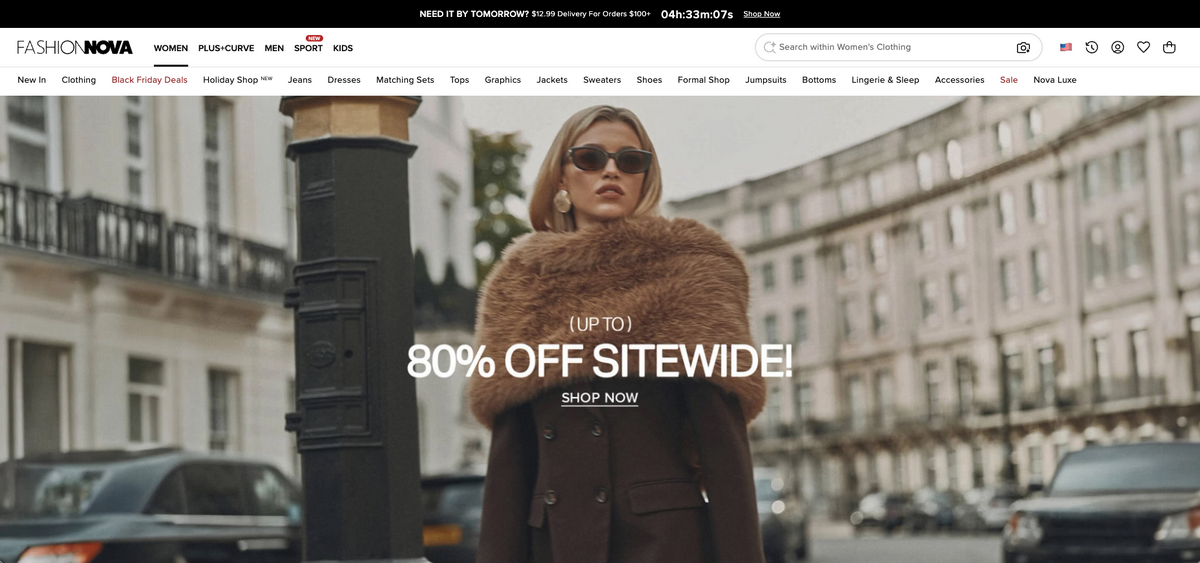
Fashion Nova is an American fast-fashion retailer selling affordable, trend-driven clothing, shoes, and accessories, including dedicated menswear and plus-size collections.
🌟 What makes it successful: Fashion Nova understood early on that Instagram wasn’t just a place to advertise clothing. It was where its target audience first discovered trends. The company built an extensive network of influencers, ranging from smaller fashion creators to celebrities like Cardi B. It paired that constant social media exposure with an exceptionally fast product release cycle.
The two strategies complement each other: influencers generate interest in new trends, while frequent product releases give them something new to talk about.
💻 What its Shopify store does well: Fashion Nova goes beyond the standard New Arrivals collection. It has a dedicated page for products added during the week, complete with category filters and a search function specifically for that collection. Its main navigation also gives new products prominent placement.
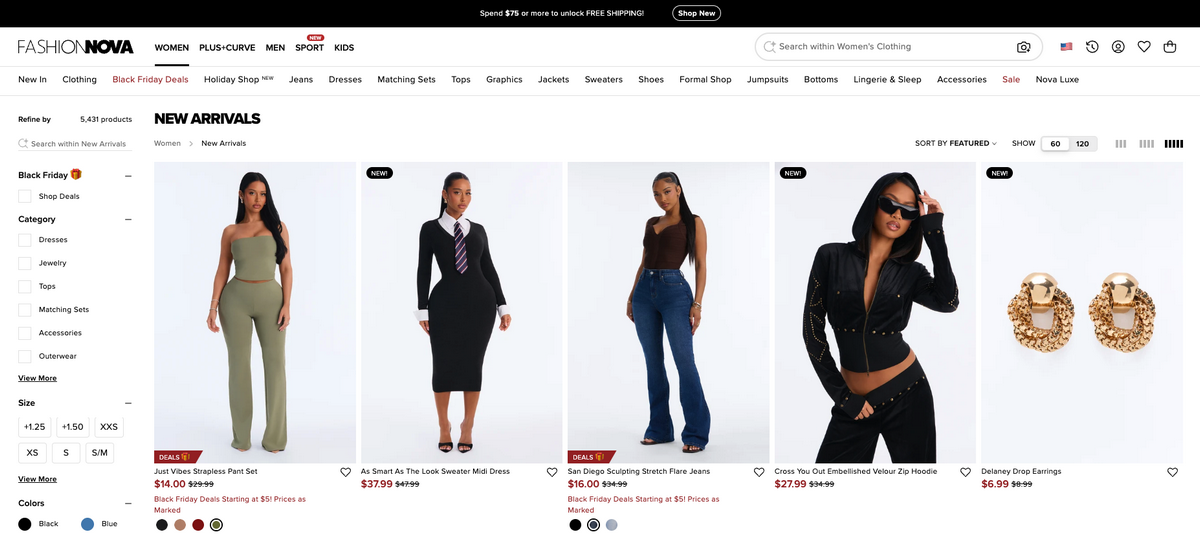
💡 What you can borrow: Create a predictable product release schedule. You don’t need hundreds of new products (imagine managing that inventory!). Even introducing three new items on the first Friday of every month, supported by an email campaign and social media teasers, can give customers a reason to revisit your store.
4. Alo Yoga: Building a Lifestyle Around Its Products
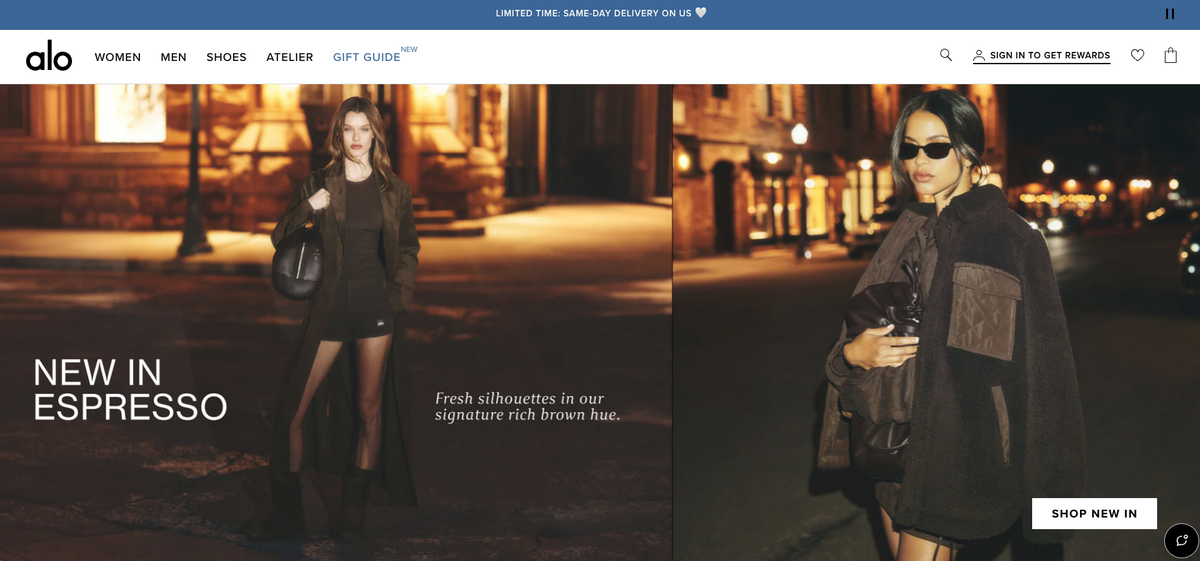
Alo Yoga sells premium activewear, yoga clothing, accessories, and wellness products designed for both exercise and everyday life.
🌟 What makes it successful: Alo has built an entire wellness ecosystem around its clothing. The brand offers educational content, works with yoga instructors, organizes community experiences, and operates physical wellness spaces.
One of its most interesting initiatives is Alo Moves, now called ALO Wellness Club. Its app offers free access to thousands of classes covering yoga, Pilates, fitness, meditation, and other wellness activities.
Think about what that means for customer engagement. Someone might only buy a new pair of leggings every few months but practice yoga several times a week. Through its content, Alo can remain part of that person’s daily routine without constantly asking them to buy something.
On top of that, they partnered with major influencers across regions and industries, tapping into millions of consumers worldwide.
💻 What its Shopify store does well: Alo incorporates lifestyle-oriented shopping guides into its main navigation. Alongside traditional clothing categories, customers can browse dedicated edits for travel, loungewear, and seasonal outfit inspiration. These collections help shoppers imagine how the products fit into their everyday lives rather than simply browsing an inventory of clothes.
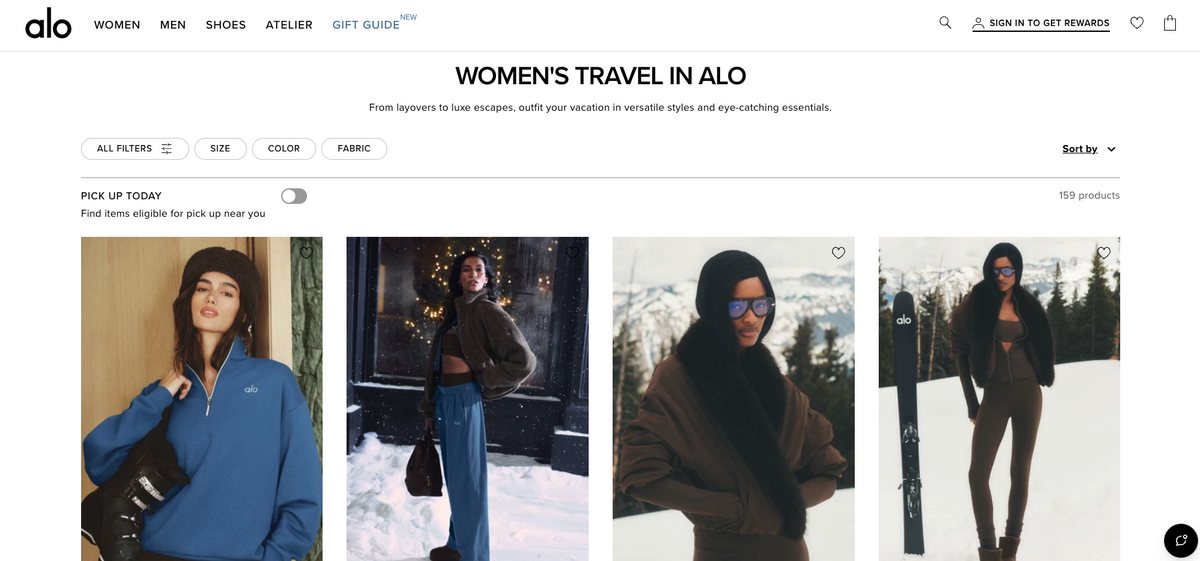
💡 What you can borrow: Create one genuinely useful piece of content for each major product category. If you sell yoga accessories, publish a beginner’s guide to using yoga blocks. If you sell gardening supplies, create a seasonal planting calendar. Give customers a reason to visit your website even when they’re not shopping.
Top Shopify Beauty Stores
Buying a foundation online when you’re not entirely sure of your shade is a bit of a gamble. And how do you decide whether you need a $30 moisturizer when dozens of other brands promise the same results for a lower price?
In the beauty niche, product education, customer trust, and personal recommendations play a huge role in purchasing decisions. And believe me, I’m the kind of person who can spend hours comparing two nearly identical shades of mauve lip oil.
These three Shopify stores show how differently beauty brands can approach these hurdles.
5. Kylie Cosmetics: Turning Product Launches Into Events
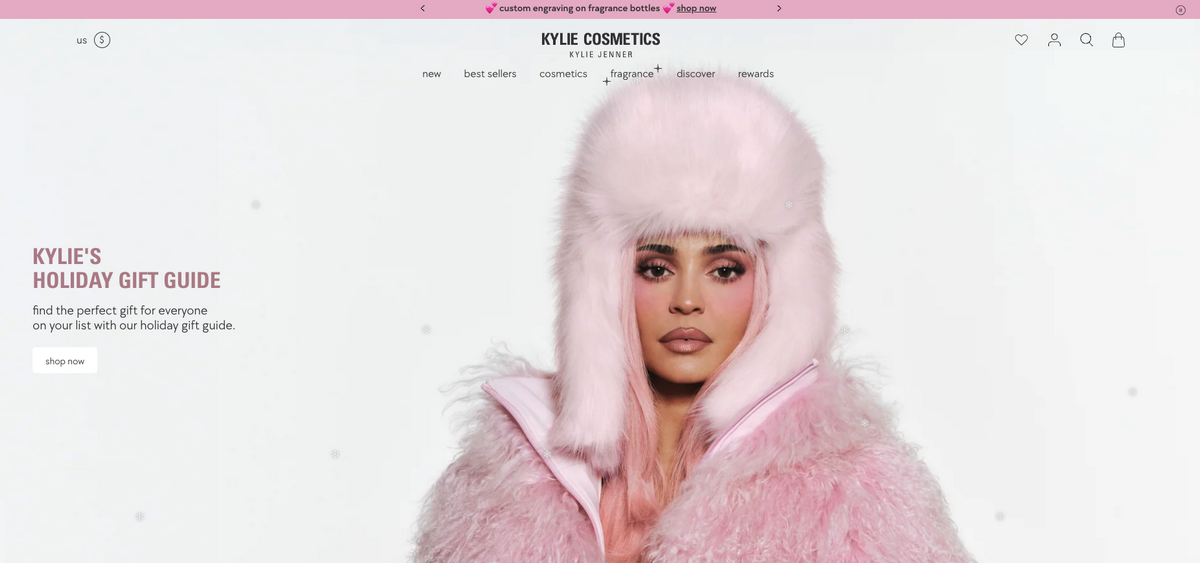
Kylie Cosmetics is the beauty brand founded by Kylie Jenner in 2015, selling makeup, including its signature lip kits, as well as skincare and fragrances as part of its broad beauty portfolio.
🌟 What makes it successful: When Kylie launched her first three Lip Kits in November 2015, they sold out in less than a minute, according to parent company Coty.
As you’d imagine, Kylie used her social media presence to tease upcoming collections, announce release dates, and build anticipation around limited quantities. Buying a lipstick suddenly became an event that fans planned for. Of course, having millions of followers is an advantage most online sellers don’t have. But the product drop model itself is worth studying.
💻 What its Shopify store does well: Kylie Cosmetics gives seasonal releases dedicated space on its homepage. Its holiday campaign, for example, introduces festive makeup and fragrance gift sets while incorporating established bestsellers into the new collections. This allows the brand to create excitement around familiar products by presenting them in a new context.
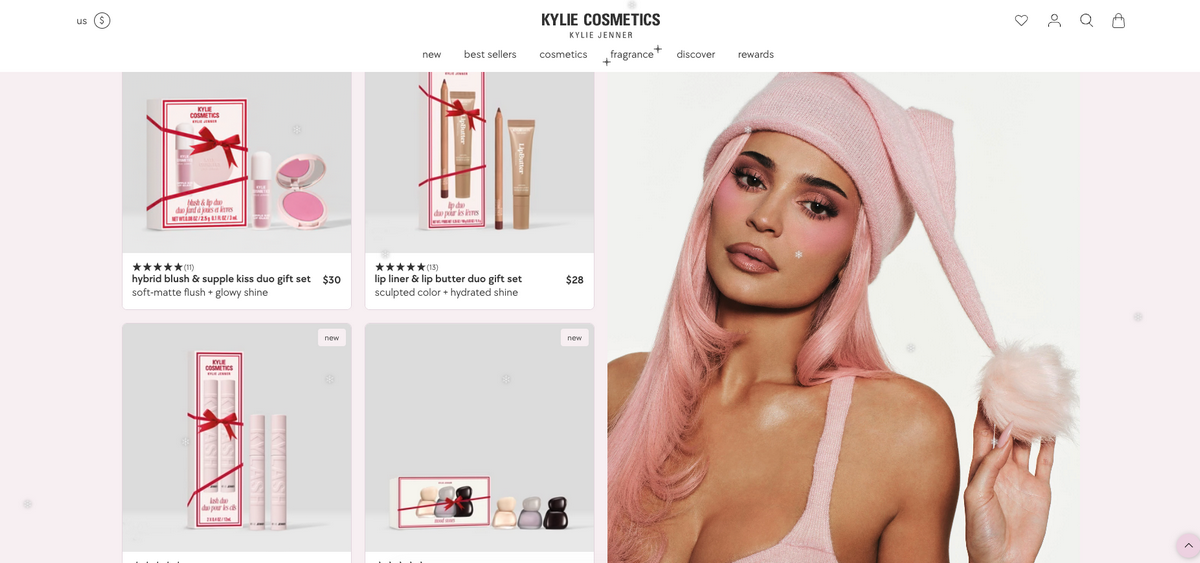
💡 What you can borrow: Give your next product launch a proper release date. Start sharing previews a week before, collect email sign-ups from interested customers, and announce when the product goes live. You don’t need a celebrity-sized audience to make a launch feel special.
6. Fenty Beauty: Recognizing an Underserved Audience
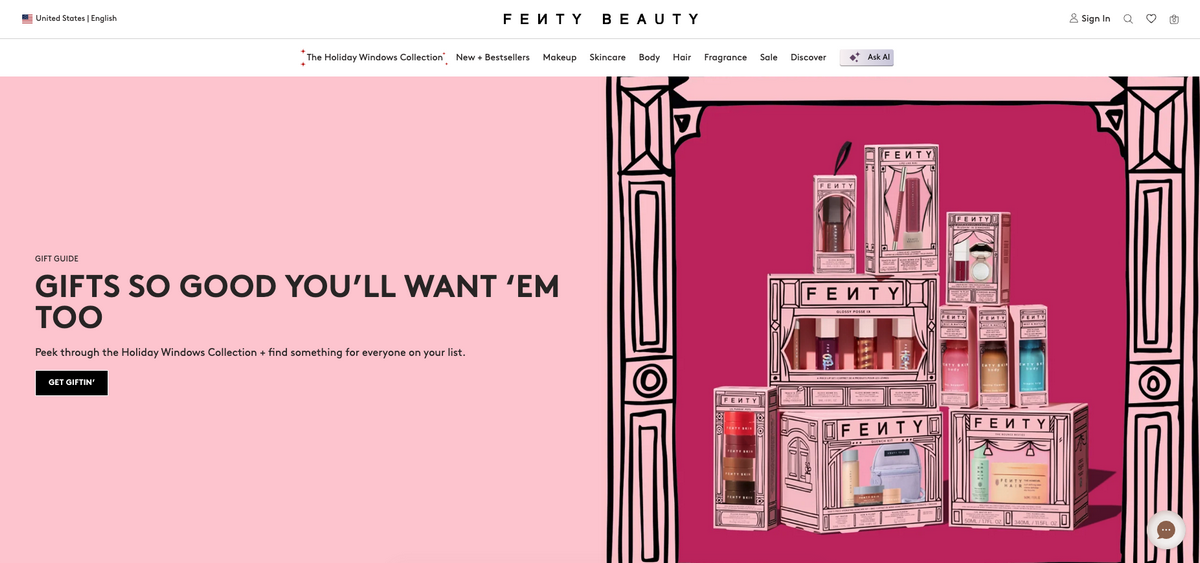
Fenty Beauty is Rihanna’s cosmetics brand, launched in 2017, offering foundations, concealers, lip glosses, blushes, and other makeup products designed specifically for a diverse range of skin tones.
🌟 What makes it successful: Fenty Beauty entered the market with 40 foundation shades, including options for darker skin tones that many established beauty brands had historically underserved. Inclusivity wasn’t an advertising campaign added after developing the products. It was the starting point for developing them.
The launch helped spark what became known as the Fenty Effect, putting pressure on other cosmetics companies to expand their own shade ranges. Fenty had identified an existing demand that much of the industry wasn’t adequately addressing.
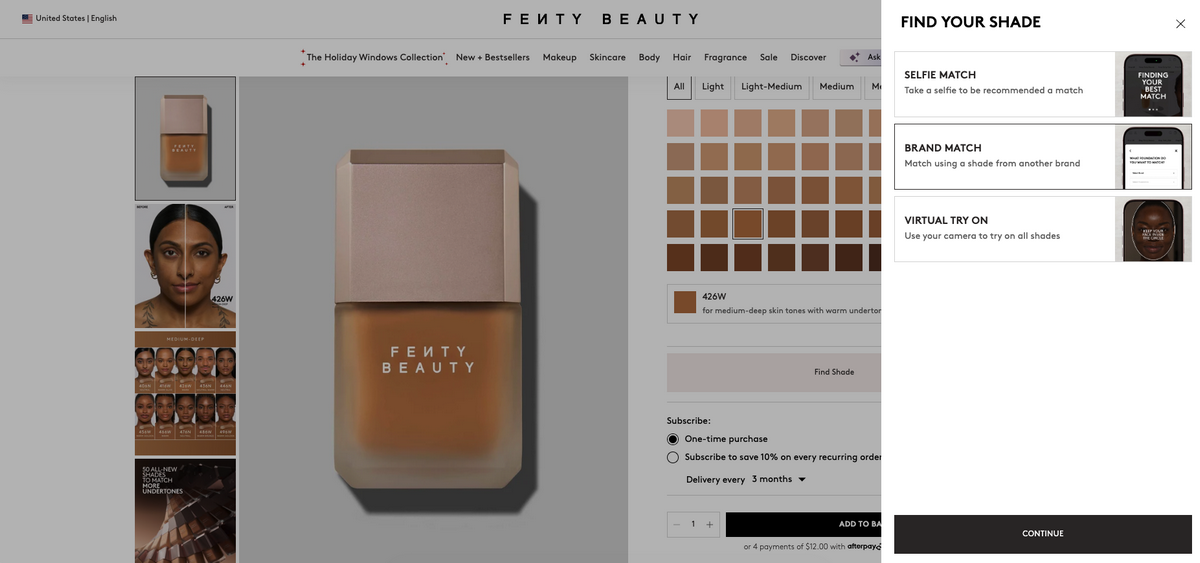
💻 What its Shopify store does well: Offering dozens of foundation shades is fantastic, but how do you help someone choose the right one through a screen? Fenty Beauty has a dedicated Shade Finder that uses a customer’s smartphone camera to analyze their skin tone and recommend a foundation match.
The experience also includes guidance on identifying skin undertones. It’s a clever way to translate the brand’s inclusive positioning into a practical shopping experience.
💡 What you can borrow: Read your competitors’ negative reviews and look for recurring complaints. Are customers struggling to find certain sizes, colors, materials, or product variations? Those complaints could point to an underserved audience worth building your store around.
Then, make it easier for those customers to find the right product. You don’t need a cutting-edge tech system like Fenty, but the main idea is the same. Add detailed sizing guides, shade comparison charts, or product recommendation quizzes to assist customers in the process.
Sometimes, helping shoppers understand which product is right for them is just as important as offering more options.
7. Glossier: Letting Customers Shape the Products
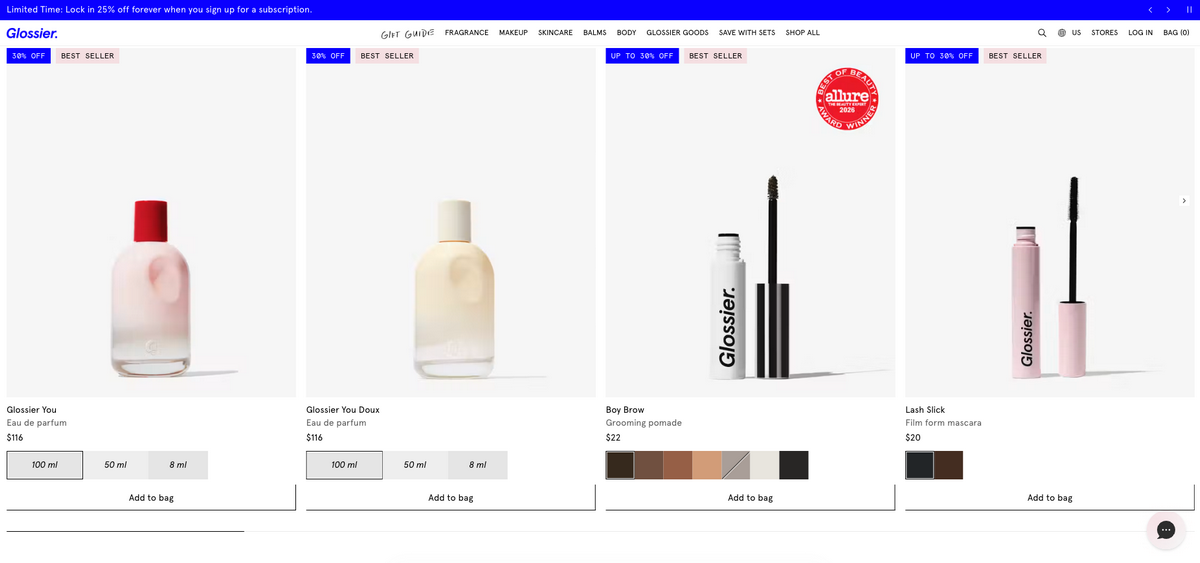
Anyone who was online in 2016 knows this one. Glossier is an American beauty brand selling skincare, makeup, body care, and fragrances that became popular for its emphasis on natural-looking beauty and minimalist makeup routines.
🌟 What makes it successful: Interestingly, Glossier started with a blog, not a product. In 2010, founder Emily Weiss launched Into The Gloss, a beauty publication featuring interviews, skincare routines, and conversations about makeup. By the time Glossier launched in 2014, Weiss already had a community of readers openly discussing what they loved (and hated) about beauty products.
Take its Milky Jelly Cleanser. Before developing it, Weiss published a blog post asking readers to describe their ideal facial cleanser. Nearly 400 comments were collected, organized, and passed on to the brand’s chemist.
💻 What its Shopify store does well: Glossier brings its editorial roots into its store through educational product content. Its Milky Jelly Cleanser page, for example, explains how the two textures of the formula work, accompanied by imagery that helps customers understand the cleansing experience before buying.
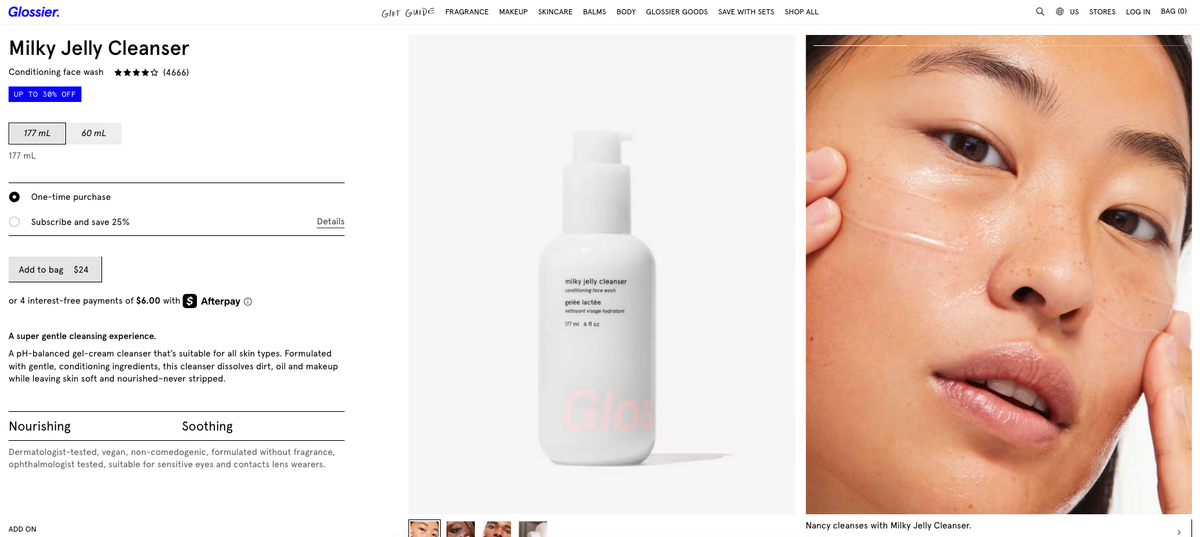
💡 What you can borrow: Before expanding your product catalog, ask your existing customers what they’d like you to sell next. Run an Instagram poll, send a short email survey, or start a conversation in your comments section. You can also incorporate genuine customer quotes into your product pages to address common concerns in your audience’s own words.
Top Shopify Footwear and Accessories Stores
Footwear and accessories are interesting niches because there’s plenty of room to differentiate even the most ordinary products. Take socks, for example. How do you get someone excited about buying something they can pick up at practically any supermarket?
The following brands do exactly that. They have found ways to compete beyond price and appearance, whether through material innovation, a convenient shopping experience, or a social mission.
8. Allbirds: Making Materials Part of the Brand Story
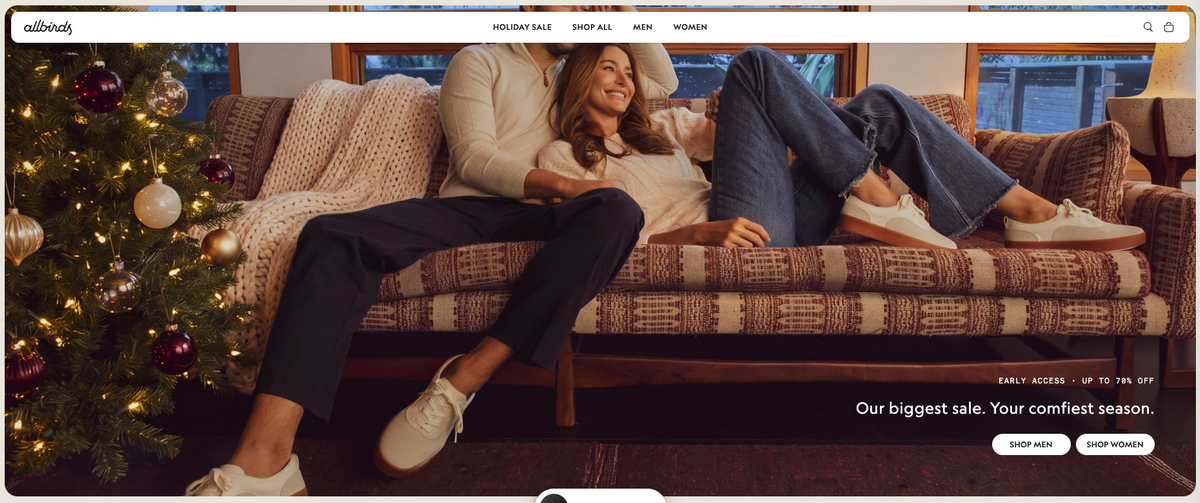
Allbirds is a footwear brand best known for its minimalistic sneakers made with natural and renewable materials, including Merino wool, tree fibers, and sugarcane.
🌟 What makes it successful: Allbirds entered a market dominated by brands competing on athletic performance, celebrity endorsements, and fashion trends. Its approach was different: it made the materials behind its shoes a central part of its identity.
The brand developed SweetFoam, a sugarcane-based material used in its shoe soles, and incorporated natural fibers into its footwear. These choices gave Allbirds something tangible to talk about when communicating its sustainability goals.
That positioning helped Allbirds stand out, although its subsequent financial struggles and acquisition in 2026 are a reminder that strong brand storytelling alone doesn’t guarantee long-term growth.
💻 What its Shopify store does well: On its Men’s Wool Runner product page, Allbirds includes a dedicated Behind the Design section that breaks down the shoe’s materials and their practical benefits, from the temperature-regulating properties of wool to the cushioning provided by its sugarcane-based sole.
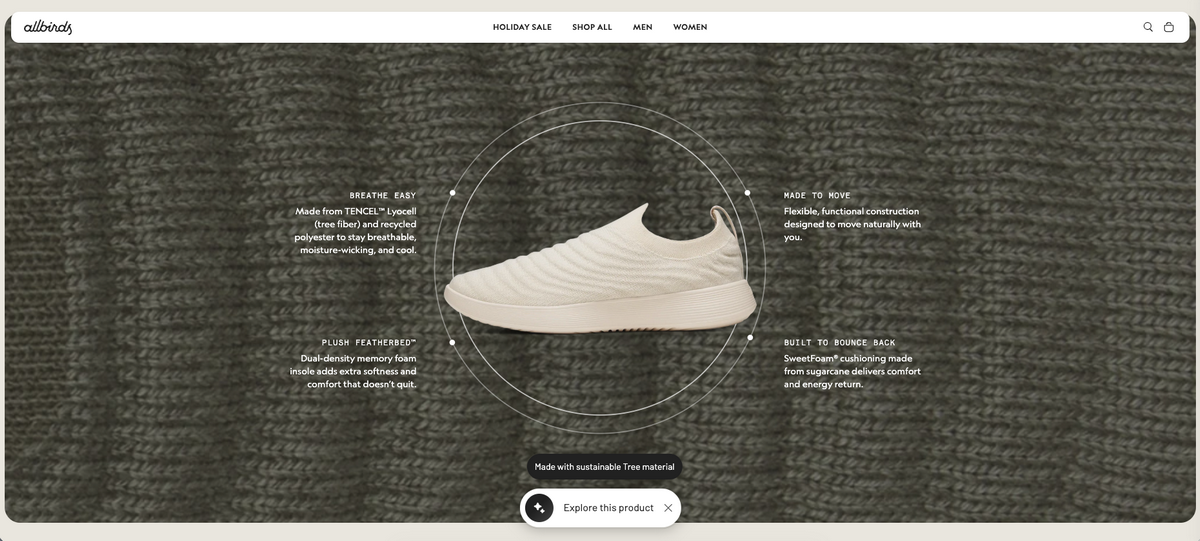
💡 What you can borrow: Go beyond adjectives like “premium,” “eco-friendly,” or “high-quality.” If you sell linen bedding, explain why linen is breathable and how it feels during warmer months. Give customers a concrete reason to care about the materials you’ve chosen.
9. Steve Madden: Bringing an Established Retail Brand Online
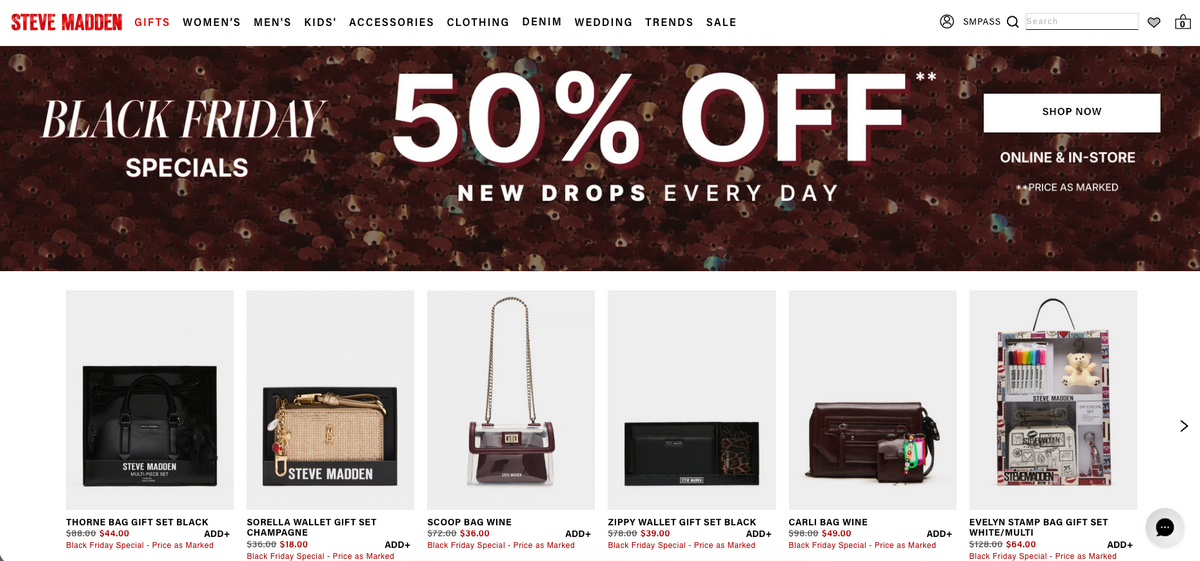
Steve Madden is an American fashion brand founded in 1990 that sells footwear, handbags, clothing, and accessories through physical stores, retail partners, and its own e-commerce channels.
🌟 What makes it successful: Unlike many brands on this list, Steve Madden was already an established retail business long before Shopify existed. Its challenge wasn’t building brand awareness from scratch but translating decades of retail experience into a consistent online shopping experience.
Using Shopify, the company unified 30 international e-commerce sites across three brands. This allowed regional teams to adapt campaigns and content to their local markets while maintaining a consistent brand identity. According to Shopify’s case study, the project resulted in a 16% increase in conversion rates.
💻 What its Shopify store does well: Steve Madden organizes its extensive product catalog around both product types and shopping intentions. Customers can browse traditional categories like boots, heels, and handbags, but they can also shop by trends or occasions. Its dedicated Wedding menu, for instance, includes everything from bridal shoes to rehearsal dinner outfits and wedding guest footwear.
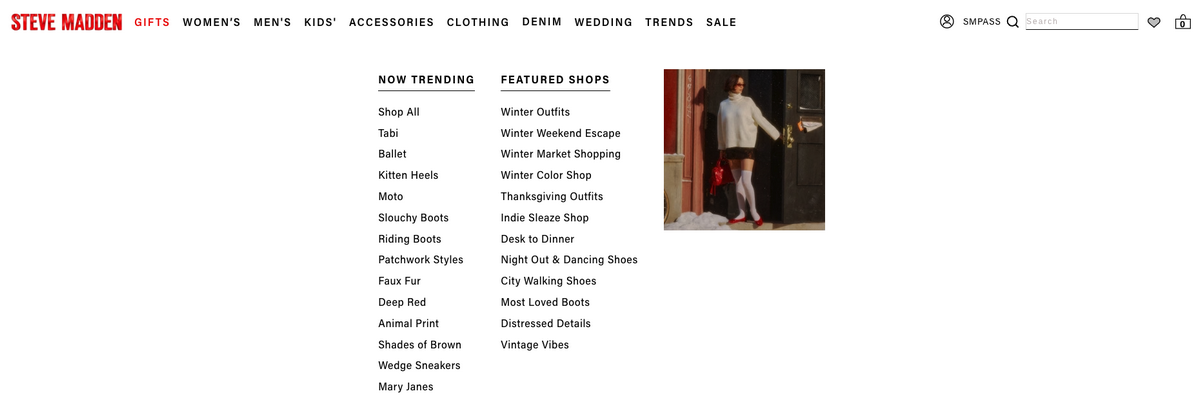
💡 What you can borrow: As your catalog grows, organize your collections around how customers actually shop. If you sell home accessories, consider adding collections such as Small Apartment Essentials or Housewarming Gifts alongside traditional product categories. Not everyone arrives at your store knowing exactly what they’re looking for.
10. Bombas: Giving Everyday Purchases a Purpose
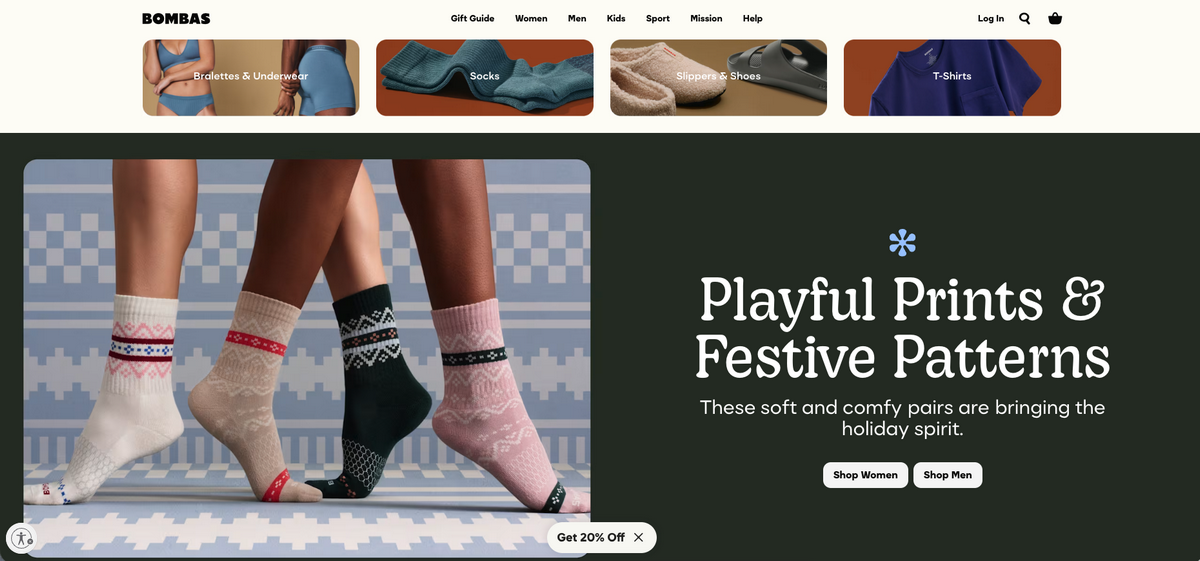
Bombas is an American brand that started by selling socks before expanding into underwear, T-shirts, slippers, and other everyday essentials.
🌟 What makes it successful: Bombas was founded after its founders learned that socks were among the most requested clothing items at homeless shelters. That insight became the foundation of its business model: for every item purchased, Bombas donates an essential clothing item to someone in need.
What’s particularly interesting is that the company designs products specifically for donation, taking into account the needs of the people receiving them. According to its website, Bombas has donated over 200 million clothing items through its network of giving partners.
💻 What its Shopify store does well: Visit one of Bombas’ sock product pages and you’ll notice its One Purchased = One Donated message immediately below the Add to Bag button. The brand doesn’t make shoppers dig through its About Us page to understand its mission. Instead, it communicates the impact of their purchase precisely when they’re deciding whether to buy.
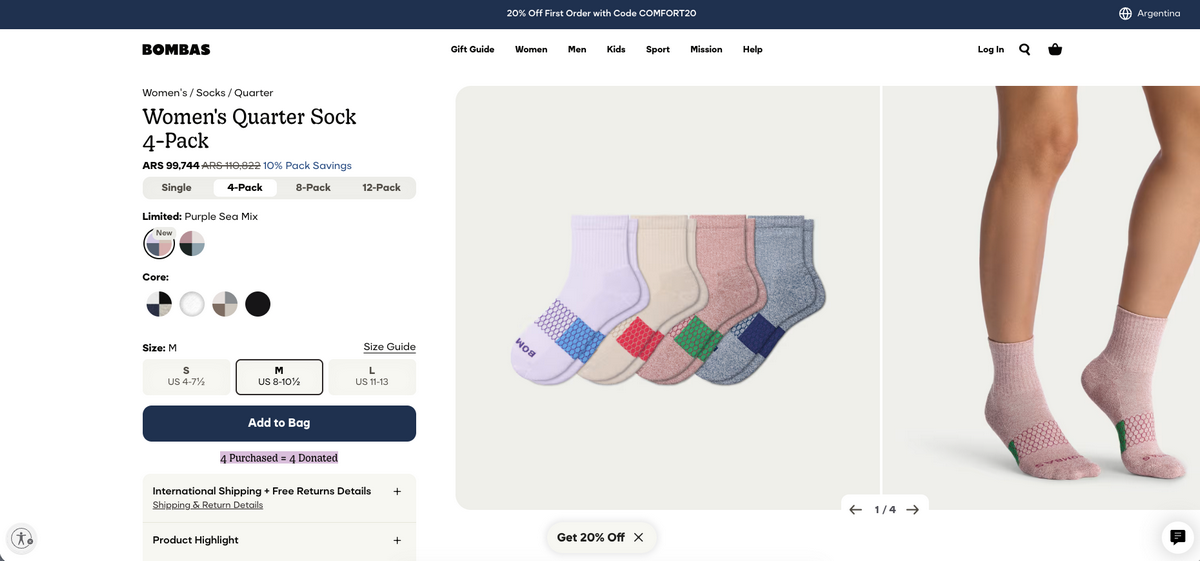
💡 What you can borrow: If your business supports a social or environmental cause, communicate it throughout the shopping journey. Add a short, specific explanation near your purchase buttons, in your shopping cart, or in your order confirmation emails. And make sure customers can easily find evidence of the impact you’re claiming.
What the Top Shopify Stores Have in Common
After looking at these ten stores, one thing is clear: each brand sells a specific point of view or experience, not just a product.
Gymshark sells a sense of belonging to a fitness community. Fenty Beauty sells the idea that beauty should include everyone. Allbirds gives customers a reason to care about what their shoes are made of. And Bombas turns an everyday purchase into an opportunity to give back.
You could find similar products elsewhere, often at a lower price. Yet these brands have given customers a reason to choose them that goes beyond the product itself.
Looking more closely, there are three recurring patterns worth paying attention to:
- They know exactly who they’re selling to. SKIMS recognized that traditional shapewear wasn’t designed for everyone. Fashion Nova understood that its audience wanted affordable access to the latest trends. Having a clear customer in mind shapes everything from product development to marketing.
- They have a repeatable growth strategy. Kylie Cosmetics builds anticipation around product drops, Gymshark maintains relationships with fitness creators, and Glossier involves its community in product development. These aren’t isolated marketing campaigns but approaches the brands can return to time and again.
- Their online stores reflect their positioning. Fenty’s Shade Finder reinforces its commitment to inclusivity, Allbirds’ product pages explain the materials behind its shoes, and Bombas communicates its donation model right next to the purchase button. Their websites actively support the reasons customers choose them.
If you’re starting an online business, it’s easy to get caught up in finding winning products, choosing a Shopify theme, or figuring out which apps to install. But there’s a question worth answering before any of that: why would someone buy this product from you rather than from another store?
The more specific your answer, the easier it becomes to make decisions about your products, marketing, content, and store design. Ultimately, it shapes your brand’s overall identity and mission.
How to Apply These Lessons to Your Own Store
You don’t need Gymshark’s marketing budget or Kylie Jenner’s Instagram following to put these ideas into action. Here’s where I would start if I were building a Shopify store from scratch:
- Define your brand’s point of view in one sentence. Instead of “I sell home accessories”, try “I help renters make small apartments feel like home without spending a fortune”. Use keyword research to understand whether people are actively looking for what you offer and adapt to it. This will resonate with readers while also improving your Shopify SEO.
- Pick one growth strategy and commit to it. Monthly product drops, educational content, customer-led product selection… choose whichever makes the most sense for your niche and resources, rather than trying to do everything at once. Consistency also helps build customer loyalty: when people know what to expect from your brand, they have a reason to keep coming back.
- Make your store reflect your point of view. Your homepage should communicate what makes your brand different, your product pages should demonstrate it, and your About page should explain why it matters to you. You can also use dedicated landing pages to target specific audiences or promote new collections.
- Build a small community first. Partner with a few micro-creators, ask your first customers for feedback, or start a niche-specific newsletter. Having 100 genuinely engaged followers is a much better starting point than having thousands who barely remember your brand.
- Keep your store simple until you find what works. Start with a focused product catalog, clear navigation, and a pricing strategy that protects your margins. Once you’re generating consistent sales, experiment with upselling and cross-selling to scale your online business before investing in more complex features.
All in all, keep in mind that your priority right now is to figure out what resonates with your customers, build on what works, and adjust what doesn’t. It’s much easier to grow a small store with a clear identity than a big catalog with no particular reason for customers to choose it.
Frequently Asked Questions
What Are the Most Successful Brands Currently Using Shopify?
Gymshark, SKIMS, Kylie Cosmetics, Alo Yoga, Steve Madden, and Bombas are among the most recognizable brands using Shopify. They operate across different industries and serve customers worldwide. However, brands can change e-commerce platforms as their business needs evolve.
Do Large Brands Use the Same Shopify Plan as Small Stores?
Not usually. Many large brands use Shopify Plus, an enterprise-level plan with advanced checkout customization, automation, and multi-store management capabilities. However, they still use the same core e-commerce platform available to smaller sellers. Check out our Shopify pricing guide for a full breakdown of plans and costs.
What Do the Biggest Shopify Stores Have in Common?
The biggest Shopify stores have a distinct brand identity, a clearly defined target audience, and a repeatable growth strategy. Their websites also reinforce their positioning, whether through product storytelling, educational content, personalized shopping experiences, or community-driven initiatives.
Can a Small Store Realistically Learn From a Brand Like Gymshark or Allbirds?
Absolutely. The key is to borrow the principle, not the budget. Instead of replicating Gymshark’s global athlete network, partner with a few micro-influencers in your niche. Similarly, you can take inspiration from Allbirds by explaining the materials behind your products and why you chose them.
Which Shopify Stores Are Known for the Best Website Design?
Fenty Beauty stands out for its interactive Shade Finder, SKIMS for its detailed sizing and fit information, and Steve Madden for its intuitive navigation across an extensive product catalog. Each demonstrates how good website design goes beyond aesthetics to solve an actual customer problem.
Do Most Big Shopify Brands Use Shopify Plus Specifically?
Shopify Plus is a popular choice among large brands because it’s designed for high-volume and complex businesses. According to Shopify’s official pricing page, Shopify Plus starts at $2,300 per month with a three-year commitment. However, a new online store doesn’t need these enterprise-level features. The Basic plan offers everything you need to launch and start selling, and you can upgrade as your business grows.
Build A Shopify Store With A Purpose
If there’s one lesson to take away from these top Shopify stores, it’s that you don’t necessarily need to reinvent a product to build a successful business. Bombas did it with socks, Gymshark with workout clothes, and Glossier with everyday beauty essentials. What made them different was the perspective they brought to an existing market.
As a new seller, your job is to figure out what you want your brand to stand for, who you’re building it for, and how your online store can communicate that from the very first visit.
That’s where BuildYourStore comes in. Not to help you craft your point of view, but to take the setup hassle off your plate so you can actually focus on what matters. Build your store for free in minutes and take advantage of the extra time on your hands to develop your brand, understand your customers, and find a growing strategy that works for you.
Starting your Shopify store from scratch? Here are a few more reads you might find helpful: